Modern coastal interior design strips away the nautical kitsch, the rope mirrors, the anchor wall art, the overdone navy-and-white stripes, and replaces it with something cleaner, quieter, and more livable. It’s about capturing the feeling of the coast, light, air, calm, without turning your living room into a themed attraction. Think natural textures, airy palettes, and a layout that breathes. Whether you’re three blocks from the beach or landlocked in the Midwest, this style translates well because it prioritizes comfort and simplicity over forced seaside clichés.
Table of Contents
ToggleKey Takeaways
- Modern coastal interior design prioritizes clean lines, natural textures, and muted color palettes inspired by the shoreline rather than tacky nautical clichés.
- Incorporate natural materials like linen, rattan, jute, and weathered wood to add warmth and tactile contrast while maintaining a contemporary aesthetic.
- Modern coastal style works best with neutral color foundations (whites, warm grays, beiges) layered with ocean-inspired accents like soft seafoam or pale blue used sparingly.
- Maximize natural light through minimal window treatments like sheer linen curtains or woven wood shades to capture the airy, calm feeling of the coast.
- Keep accessories and furnishings minimal and functional—choose low-profile furniture silhouettes and simple lighting fixtures that complement the streamlined modern coastal aesthetic.
- Modern coastal interior design translates well anywhere by emphasizing comfort and simplicity, making it ideal for coastal homes and landlocked spaces alike.
What Is Modern Coastal Interior Design?
Modern coastal style merges the relaxed, organic vibe of traditional beach houses with the clean lines and restraint of contemporary design. You won’t find driftwood signs that say “Seas the Day.” Instead, expect open floor plans, neutral color schemes anchored by soft blues and greens, and an emphasis on natural light.
The foundation is simplicity. Furniture tends toward low-profile silhouettes, platform beds, streamlined sofas, minimal cabinetry. Materials skew natural: linen, jute, rattan, raw wood, stone. The palette borrows from the shoreline but stays muted, sand, fog, seafoam, weathered cedar, not the bright primaries of a beach umbrella.
Unlike heavily styled interiors, modern coastal spaces often incorporate principles of organic interior design, which prioritize harmony with natural elements and sustainable materials. This overlap keeps rooms feeling grounded rather than decorator-perfect.
Key Elements of Modern Coastal Style
Color Palettes That Capture the Coast
Start with a neutral base: whites, warm grays, beiges, and soft taupes. These tones reflect light and make rooms feel larger, critical in older coastal homes with smaller windows.
Layer in ocean-inspired accents sparingly. A muted seafoam throw pillow, a single piece of driftwood-gray cabinetry, or a pale blue accent wall works. Avoid saturated cobalt or turquoise unless you’re going for a Miami Vice revival.
For trim and millwork, pure white or off-white keeps things crisp. If the room feels too clinical, warm it up with honey-toned wood furniture or a sisal rug. The goal is balance, not a sterile gallery, not a beach souvenir shop.
Designers working on coastal contemporary projects often pull colors directly from their site’s landscape: the specific gray of local stone, the exact beige of wind-smoothed sand.
Natural Materials and Textures
Texture interior design is what separates modern coastal from cold minimalism. You need tactile contrast: smooth plaster walls against chunky linen upholstery, polished concrete floors warmed by a wool-blend rug, glass pendant lights hung over a rough-hewn dining table.
Common materials include:
- Rattan and wicker: Use these for chairs, light fixtures, or storage baskets. They add warmth without feeling heavy.
- Linen and cotton: Slipcovers, curtains, and bedding in natural fibers wrinkle easily, that’s the point. They look lived-in, not fussy.
- Reclaimed or weathered wood: Look for pieces with visible grain or a sun-bleached finish. Avoid glossy stains.
- Stone and concrete: Countertops, fireplace surrounds, or even polished concrete floors tie into the raw, elemental aesthetic.
- Jute and sisal: Flatweave rugs ground a space and handle sandy foot traffic better than plush pile.
Avoid anything too shiny or ornate. Brass can work if it’s unlacquered and allowed to patina: chrome and polished nickel feel out of place.
How to Create a Modern Coastal Living Room
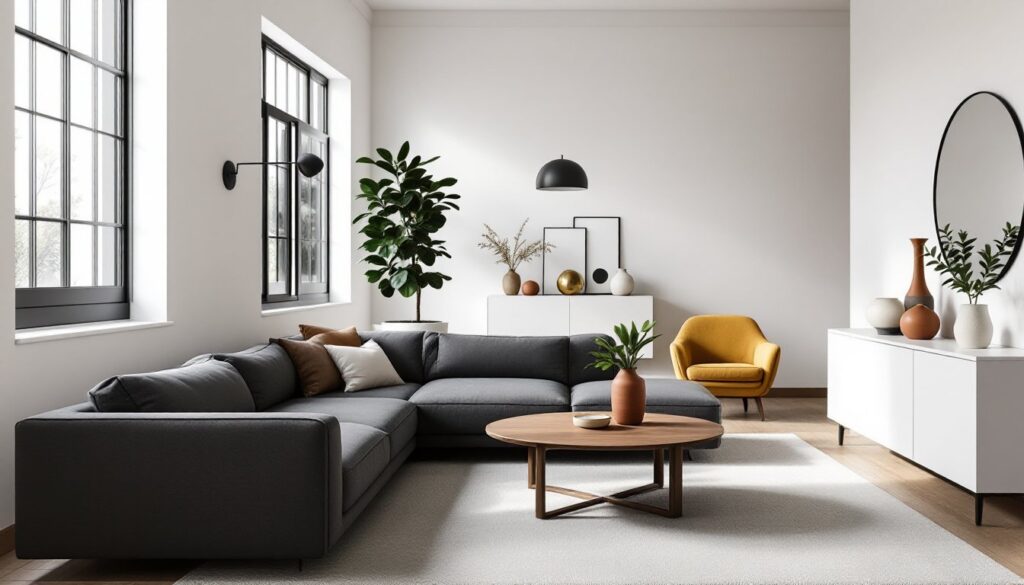
Start with furniture layout. Modern coastal living rooms prioritize flow and sightlines, especially if you have water views. Arrange seating to face windows or a focal point like a fireplace, and leave pathways clear. A sectional works well in open-plan spaces: just keep the upholstery light (linen, cotton blends, performance fabric in sand or fog tones).
For coffee tables and side tables, opt for natural materials. A low-profile teak coffee table, a live-edge wood slab on metal hairpin legs, or even a pair of upholstered ottomans (which double as extra seating) all fit the aesthetic.
Window treatments should be minimal. Sheer linen curtains or woven wood shades let in light while maintaining privacy. If you don’t need privacy, skip the treatments entirely, coastal style is about maximizing natural light.
Lighting fixtures set the tone. Swap builder-grade ceiling fans for rattan or seagrass pendant lights. For table lamps, choose ceramic or wood bases in muted tones, paired with linen or burlap shades. Avoid anything too glitzy.
Accessorize sparingly. A single large piece of abstract art in ocean tones beats a gallery wall of shell prints. Incorporate design elements that create rhythm through repeated shapes or colors, three matching throw pillows in varying shades of blue, or a row of identical glass vases on a shelf.
Safety note: If you’re installing ceiling-mounted fixtures or fans yourself, turn off power at the breaker and use a non-contact voltage tester to confirm the circuit is dead. Coastal climates mean higher humidity: make sure any electrical boxes are rated for damp or wet locations if near open windows.
Designing a Modern Coastal Bedroom
Bedrooms should feel like a retreat, quiet, uncluttered, breathable. Start with a platform bed or simple upholstered frame in linen or cotton. Avoid heavy carved wood or tufted velvet: those skew traditional.
For bedding, layer textures: a crisp white cotton duvet, a linen coverlet in pale gray, and a chunky knit throw at the foot of the bed. Keep pillowcases simple, no ruffles or embroidery.
Wall color can go one of two ways: stick with white or warm gray for maximum light reflection, or add a single accent wall in soft blue or sage green. If you paint, use a low-VOC or zero-VOC interior paint (brands like Benjamin Moore Natura or Sherwin-Williams Harmony) to avoid off-gassing in a sleep space.
Nightstands should be functional and understated, think a single-drawer wood piece or a woven rattan cube. Table lamps in ceramic or wood with linen shades provide soft task lighting for reading.
For flooring, light oak, whitewashed pine, or engineered bamboo all work. If the existing floor is dated, painting it in a soft gray or white (using porch and floor enamel for durability) is a budget-friendly DIY option. Just ensure proper surface prep: clean, sand with 120-grit paper, prime with a bonding primer, then apply two coats.
Window treatments follow the same rule as the living room: sheer linen or no curtains at all. If you need blackout capability, install roller shades behind the sheers, they’ll stay hidden during the day.
Avoid clutter on surfaces. A single potted succulent, a small stack of books, or a piece of driftwood is enough.
Modern Coastal Kitchens and Dining Spaces
Kitchens are where modern coastal style gets practical. White or light gray cabinetry is the baseline, shaker-style doors in a matte finish work well. If you’re refacing or painting existing cabinets, use a high-quality acrylic enamel like Benjamin Moore Advance or Sherwin-Williams ProClassic for a durable, smooth finish. Prep is critical: degrease with TSP substitute, sand with 150-grit, prime with a stain-blocking primer, then apply two finish coats with light sanding (220-grit) between.
Countertops should feel natural. White quartz mimics marble without the maintenance, or go with honed granite in soft gray tones. Butcher block adds warmth but requires regular oiling (food-grade mineral oil every 4–6 weeks) and isn’t ideal near sinks unless sealed properly.
For backsplashes, subway tile in white or pale blue is a safe bet, but consider larger-format tiles (4″×12″ or 6″×6″) to reduce grout lines and maintain a clean look. Handmade ceramic tiles with slight color variation add character. Installation is standard: use white thinset, 1/16″ spacers for tight grout lines, and a penetrating sealer if using natural stone.
Hardware should be simple: brushed nickel, unlacquered brass, or matte black pulls and knobs. Avoid ornate bin pulls or anything too shiny.
Dining spaces benefit from natural wood tables, preferably something with visible grain or a raw finish. Pair with mismatched chairs (all in the same color family) or a bench on one side for casual seating. Overhead, a woven pendant light or a row of glass globe fixtures adds visual interest without blocking sightlines.
Open shelving works well in modern coastal kitchens, but only if you’re disciplined. Stock it with matching dishware in white or neutral tones, a few glass jars of dry goods, and maybe a small potted herb. Don’t let it become a catchall.
Flooring in kitchens should be durable: luxury vinyl plank (LVP) in light oak or whitewashed tones, ceramic or porcelain tile, or sealed concrete. If installing LVP yourself, acclimate planks in the room for 48 hours before laying them, and leave a 1/4″ expansion gap at all walls (cover with quarter-round trim).
Safety reminder: If you’re doing any electrical work for under-cabinet lighting or new fixtures, kitchen circuits typically require 20-amp GFCI protection per NEC standards. When in doubt, hire a licensed electrician.
Finally, keep the palette cohesive. If your living room is soft grays and whites, don’t suddenly introduce navy cabinets in the kitchen. Coastal style thrives on consistency and restraint, not abrupt shifts in tone or material.