Italian interior design doesn’t whisper, it announces itself through sun-bleached stone, hand-plastered walls, and furniture that looks like it’s survived three generations because it has. This isn’t about recreating a Tuscan villa room-by-room in suburban America. It’s about understanding the principles that make Italian spaces feel both grand and livable, then adapting them to the bones you’re actually working with. Whether you’re renovating a kitchen, refreshing a living room, or just tired of builder-grade everything, Italian design offers a framework that prioritizes craftsmanship, natural materials, and a certain unapologetic warmth. No faux finishes or theme-park authenticity required, just honest materials and thoughtful execution.
Table of Contents
ToggleKey Takeaways
- Italian interior design balances Old World opulence with lived-in practicality through architectural integrity, craftsmanship, and natural materials that age visibly and honestly.
- Natural materials like terracotta, travertine, limestone, and wood define authentic Italian interiors, with visible wear and patina celebrated as part of the aesthetic rather than flaws.
- Warm, earthy color palettes inspired by the landscape—terracotta, ochre, sienna, olive, and cream—create the sunlit yet grounded atmosphere characteristic of Italian design.
- Start renovations with large fixed elements like flooring, walls, and cabinetry, or focus on swappable changes like paint, hardware, and textiles if working within an existing space.
- Tuscan style, the most recognized Italian interior design subset, emphasizes exposed ceiling beams, stone backsplashes, and substantial furniture that appears to have evolved naturally over decades.
- Mix antique and contemporary furniture pieces without coordination, layer natural-fiber textiles like linen and wool, and incorporate pottery and terracotta accessories to achieve an authentic Italian home aesthetic.
What Defines Italian Interior Design?
Italian interior design pulls from centuries of architecture, art, and regional craft traditions. Unlike minimalist Scandinavian styles or the ornate excess of French Baroque, Italian design strikes a balance between Old World opulence and lived-in practicality. Think marble countertops that show every water spot and patina’d brass fixtures that improve with age.
The foundation is architectural integrity. Exposed wooden ceiling beams (actual structural members, not decorative add-ons), arched doorways, and thick plaster walls aren’t just aesthetic choices, they reflect traditional construction methods. If you’re working in a standard stick-frame house, you won’t replicate 18th-century masonry, but you can borrow the visual weight through material choices and proportions.
Craftsmanship is non-negotiable. Hand-troweled Venetian plaster, wrought iron railings, and solid wood cabinetry (not veneered particleboard) define the style. This doesn’t mean every element needs to be custom or artisan-made, but the materials should feel substantial. A butcher-block countertop or reclaimed wood shelving conveys more authenticity than laminate trying to pass as travertine.
Color and light work together deliberately. Italian homes maximize natural light through tall windows and light-reflective surfaces, while warm color palettes ground the brightness. The overall effect feels sunlit but not washed out, warm but not dark.
Key Elements of Italian Interior Design
Natural Materials and Textures
Italian interiors lean heavily on stone, terracotta, wood, and plaster, materials that age visibly and honestly. Terracotta tile (actual clay-fired pavers, not porcelain lookalikes) works for flooring in kitchens, entryways, and bathrooms. Expect 12″×12″ or larger format tiles: smaller mosaics read more Spanish or Moroccan. Seal them properly with a penetrating sealer rated for the specific clay body, or they’ll stain immediately.
Travertine and limestone show up as countertops, backsplashes, and flooring. These are softer stones (Mohs hardness around 3-4), so they’ll etch from acidic spills and scratch more easily than granite. That’s the point, the wear is part of the aesthetic. If that doesn’t work for your household, consider honed (matte) finish instead of polished to disguise minor damage.
Wood should look like wood. Skip the polyurethane-coated, honey-toned oak in favor of natural or white-oaked finishes with visible grain. Walnut and chestnut also fit the palette. For cabinetry, face-frame construction with inset or partial-overlay doors feels more European than full-overlay frameless boxes.
Texture in surfaces carries significant weight. Venetian plaster (lime-based, applied in thin layers and burnished) creates depth that flat paint can’t match. It’s a skilled trade: if you’re DIY-ing, practice on sample boards first. A credible alternative: textured paint applied with a trowel or sponge, then glazed. It won’t fool a plasterer, but it adds dimension.
Warm, Earthy Color Palettes
Italian color schemes pull from the landscape: terracotta, ochre, sienna, olive, and cream. These aren’t bright or primary, they’re muted, sun-faded versions. Think of the color a clay pot turns after a season outdoors, or the yellow-gray of aged stucco.
For walls, consider warm whites with cream or yellow undertones rather than stark cool whites. Benjamin Moore’s “White Dove” or Farrow & Ball’s “Pointing” approximate the look, though Italian lime washes have a chalky, breathable quality that acrylic latex doesn’t replicate. Lime wash is DIY-friendly but requires specific surface prep (porous, absorbent substrates like plaster or unsealed masonry).
Accent walls in burnt orange, deep olive, or rust work in dining rooms or bedrooms. Pair them with natural wood tones and aged metals (brass, bronze, oil-rubbed iron). Avoid mixing in cool grays or stark black, those pull the palette away from the warmth that defines the style.
Fabrics echo the same warmth: linen, wool, and cotton in natural, undyed tones or vegetable-dyed hues. Heavy linen drapes, wool area rugs, and cotton upholstery age better and feel more authentic than synthetics. If you’re reupholstering a piece, choose a 12-14 oz linen for durability.
How to Bring Italian Design into Your Home
Start with the largest fixed elements: floors, walls, and cabinetry. Ripping out tile or replastering walls is disruptive and expensive, so prioritize these if you’re renovating. If you’re working within an existing space, focus on swappable or surface-level changes that still deliver impact.
Flooring: If you’re laying new tile, terracotta pavers or travertine tiles create instant authenticity. For a budget-friendly alternative, luxury vinyl plank (LVP) in wide-plank oak or walnut tones mimics wood without the moisture sensitivity. It won’t age the same way, but it’s a credible stand-in for renters or those avoiding a full rip-out. Standard installation is floating-floor over underlayment: follow manufacturer acclimation guidelines (usually 48 hours in the room before install) to prevent gapping.
Walls: Venetian plaster is the gold standard but requires either hiring a tradesperson or serious practice. A middle-ground option: apply a textured joint compound with a trowel in overlapping, irregular strokes, let it dry, then topcoat with a satin or eggshell finish in a warm neutral. Sand lightly between coats (220-grit) for a smoother finish. Professionals working with design proposals often specify lime-based plasters for high-end projects.
Cabinetry and built-ins: If you’re not replacing cabinets, paint existing ones in a warm cream or soft sage. Remove any shiny hardware and swap in unlacquered brass or wrought iron pulls. Unlacquered brass tarnishes over time, that’s the appeal. If that sounds like a maintenance headache, go with oil-rubbed bronze. For open shelving, use solid wood boards (1.5″ thick minimum) on heavy-duty brackets. Pine, oak, or reclaimed barn wood all work: just make sure they’re sanded smooth (start at 80-grit, finish at 220) and sealed with a matte or satin poly or hard wax oil.
Furniture: Italian homes mix antique and contemporary pieces without fuss. Look for solid wood dining tables, upholstered linen sofas, and leather accent chairs. Avoid matching furniture sets, they feel too coordinated. Thrift stores, estate sales, and online marketplaces often have solid wood pieces that just need refinishing. Strip old varnish with a chemical stripper (work outdoors or in a well-ventilated space: wear nitrile gloves and a respirator), sand, and apply a natural oil finish or matte poly.
Lighting: Wrought iron chandeliers, lantern-style pendants, and sconces with alabaster or seeded glass shades fit the aesthetic. If you’re replacing a light fixture, verify the electrical box is rated for the weight (ceiling boxes should support at least 50 lbs for chandeliers). For pendant lights over islands, hang them 30-36 inches above the countertop for proper task lighting without head-bumping.
Textiles and accessories: Swap synthetic curtains for linen panels (unlined for a casual drape, lined for insulation and privacy). Layer in wool or jute area rugs, linen throw pillows, and cotton or linen table runners. Pottery, ceramic bowls, and terracotta planters (actual clay, not resin) add textural variety without clutter. Design inspiration platforms like Homify showcase how these elements layer in real projects.
Popular Italian Interior Design Styles
Tuscan Country Charm
Tuscan style is the most recognized Italian subset, rooted in the farmhouses and villas of rural Tuscany. It’s less formal than Venetian or Milanese design, with an emphasis on rustic materials and pastoral color schemes.
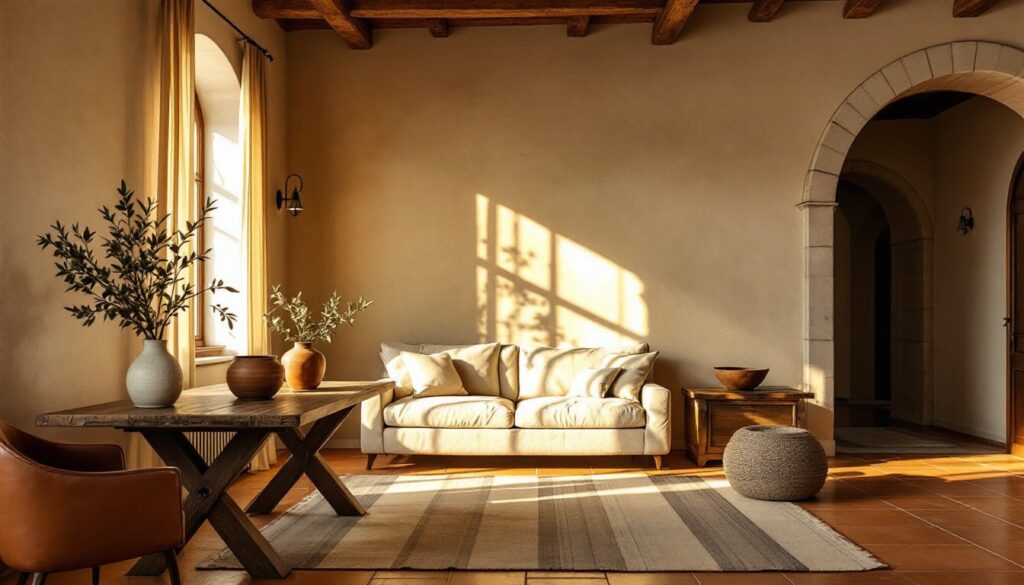
Architecturally, Tuscan interiors feature exposed wood ceiling beams (often rough-hewn or hand-adzed), plastered walls in ochre or terracotta tones, and floors in terracotta tile or wide-plank wood. If you’re adding faux beams (hollow boxes made from lightweight wood or polyurethane), mount them to ceiling joists with lag screws long enough to penetrate the joist by at least 1.5 inches. They won’t carry load, but they need to stay put.
Kitchens lean heavily on stone or tile backsplashes, open shelving, and apron-front sinks. A farmhouse sink (typically 30-36 inches wide, 8-10 inches deep) requires a modified base cabinet and sometimes additional floor support depending on material (cast iron sinks weigh 100+ lbs when full). Countertops in travertine, soapstone, or butcher block reinforce the natural material ethos.
Furniture is substantial and unrefined: trestle tables, ladder-back chairs, and carved wood armoires. Upholstery in linen, leather, or heavy cotton stripes fits better than anything overly plush. The palette skews warm, burnt sienna, golden yellow, olive green, and cream, with accents in wrought iron and terracotta.
Organic materials and natural finishes align closely with Tuscan principles, emphasizing raw textures over polished surfaces. For accessories, focus on wrought iron candle holders, ceramic pottery, and woven baskets. Avoid anything too sleek or modern: the goal is a space that feels like it’s evolved slowly over decades.
If you’re painting walls to capture the Tuscan look, try a color-washing technique: apply a base coat in a warm neutral, then brush on a diluted top coat (latex paint thinned with water or glaze medium) in a slightly darker or warmer shade. Work in small sections, wiping off excess with a rag to create uneven, sun-faded depth. Resources like Homedit frequently feature step-by-step tutorials for these finishes. Test on poster board first to dial in the ratio and technique.