Cottage-style living isn’t about square footage, it’s about creating a space that wraps you in warmth the moment you walk through the door. Whether you’re working with a 1920s bungalow or adding cottage charm to a suburban two-story, the cozy cottage aesthetic prioritizes comfort, natural materials, and lived-in character over sterile perfection. This style thrives on softness, vintage finds, and layers of texture that invite you to kick off your shoes and stay awhile. Done right, it turns any room into a retreat without requiring a gut renovation or a decorator’s budget.
Table of Contents
ToggleKey Takeaways
- Cozy cottage interior design prioritizes comfort, natural materials, and lived-in character over perfection, using soft colors, vintage finds, and layered textures to create an inviting retreat without major renovation.
- Essential cottage color palettes draw from nature—soft whites, warm creams, muted blues, sage greens, and blush pinks—using low-contrast, tone-on-tone combinations with accent colors reserved for textiles and accessories.
- Cottage furniture should be vintage, mismatched, and appropriately scaled with slipcovered upholstery, wooden pieces in natural or painted finishes, and open shelving that leaves breathing room in smaller spaces.
- Layering different textures—linen, wool, jute, weathered wood, and natural fiber rugs—creates visual and tactile warmth without relying on bold colors or expensive design interventions.
- Soft, multi-source lighting using table lamps, wall sconces, and dimmers with warm white (2700K) LED bulbs is crucial to achieving the inviting ambiance that defines cozy cottage interiors.
- Build your cottage aesthetic gradually by sourcing vintage pieces, displaying curated collections on open shelves, and rotating seasonal accessories to create an intentional, collected-over-time look rather than an overnight transformation.
What Defines Cozy Cottage Interior Design?
Cozy cottage design leans on a few core principles: natural materials, vintage or reclaimed furnishings, and an emphasis on softness over sleek lines. Think exposed wood beams (or faux beams installed with construction adhesive and finish nails), painted shiplap or beadboard wainscoting, and hardwood floors softened with area rugs.
Unlike modern minimalism, cottage interiors embrace a bit of clutter, curated clutter. Open shelving displays mismatched china, collections of vintage books, or pottery. Built-ins like window seats with storage underneath or alcove shelving add architectural interest without eating into floor space.
This style also favors modest scale. Rooms feel intimate rather than grand. If you’re retrofitting a larger space, consider defining zones with area rugs, furniture arrangement, or even a partial wall (which may require checking local codes if it impacts egress or load paths). Cottage design works best when each area has a clear purpose and a sense of enclosure.
Essential Color Palettes for Cottage Charm
Cottage color schemes pull from nature: soft whites, warm creams, muted blues, sage greens, and blush pinks. These aren’t sterile whites, opt for paints with warm undertones like Benjamin Moore’s Swiss Coffee or Sherwin-Williams’ Alabaster.
For wall treatments, consider:
- Soft whites and creams on walls and trim to maximize light in smaller rooms
- Muted blue-grays for bedrooms or bathrooms (think weathered coastal driftwood)
- Sage or moss green in kitchens or dining areas to bring the outdoors in
- Warm wood tones left natural or whitewashed on ceiling beams, furniture, or flooring
Avoid stark contrasts. Cottage style thrives on low-contrast, tone-on-tone palettes. If you’re painting wood paneling or trim, use a quality bonding primer like Zinsser B-I-N or KILZ Adhesion to prevent peeling, especially on older, glossy finishes.
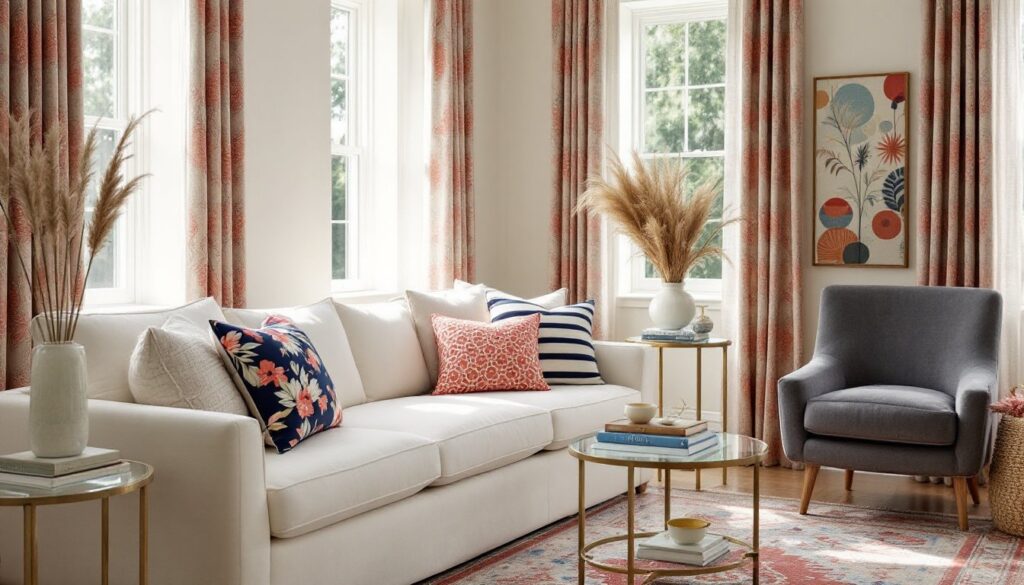
Accent colors appear in textiles and accessories rather than on walls. A faded coral throw pillow, a vintage floral cushion, or a robin’s-egg-blue ceramic vase adds warmth without committing to a bold paint job. Many homeowners exploring texture in design choices find that layering subtle hues creates depth without overwhelming small spaces.
Furniture Choices That Embrace Cottage Comfort
Cottage furniture skews vintage, lived-in, and often mismatched. You’re looking for pieces with character: a farmhouse table with turned legs, a slipcovered sofa, a painted wooden dresser with original hardware.
Key furniture elements:
- Slipcovered upholstery in linen or cotton duck canvas (washable and forgiving)
- Wooden furniture in pine, oak, or reclaimed barn wood, painted, distressed, or left natural
- Vintage or reproduction pieces like Windsor chairs, ladder-back chairs, or wire-back café seating
- Open shelving for displaying dishware, glassware, or collections
When shopping secondhand, inspect joints and frames. Wobbly chairs often need corner braces or fresh wood glue in mortise-and-tenon joints, an easy fix with bar clamps and an hour of dry time. If you’re painting furniture, use a deglosser or light sanding (120-grit) before priming to ensure adhesion.
Scale matters. Cottage rooms typically can’t handle oversized sectionals or bulky entertainment centers. Stick with furniture that leaves breathing room and doesn’t block windows or doorways. A loveseat plus two armchairs often works better than a sprawling sofa.
Details found in organic design approaches translate well here, furniture that references natural forms and traditional joinery feels more authentic than mass-produced pieces.
Textures and Fabrics That Create Warmth
Texture is where cottage style really shines. Layering different materials, linen, wool, cotton, jute, weathered wood, adds visual and tactile interest without relying on bold color.
Essential textures:
- Linen curtains (unlined or lightly lined for soft, diffused light)
- Chunky knit throws in cotton or wool
- Natural fiber rugs like jute, sisal, or braided cotton
- Quilts and coverlets in vintage florals, ticking stripes, or matelassé
- Woven baskets for storage (seagrass, wicker, or rattan)
For window treatments, avoid heavy, structured drapes. Simple linen panels on a tension rod or vintage-style café curtains (which cover only the lower half of a window) suit the style better. If privacy’s a concern, layer with matchstick blinds or Roman shades in natural materials.
On floors, layer a jute area rug (8’x10′ or 9’x12′ depending on room size) with a smaller vintage rug or runner on top. This adds dimension and lets you mix patterns without clashing.
When selecting upholstery fabric, choose medium-weight linen or cotton canvas (10–12 oz) for durability. Lighter fabrics wear poorly on high-use pieces like sofas. For DIY slipcovers, prewash fabric to account for shrinkage, linen can shrink 3-5% on the first wash.
Decorative Elements and Accessories
Cottage accessories lean vintage, handmade, and collected over time. The goal is a curated, not cluttered, look.
Decorative staples:
- Vintage dishware and glassware displayed on open shelves or in glass-front cabinets
- Botanical prints or vintage landscapes in simple wood or painted frames
- Fresh or dried flowers in ceramic pitchers, mason jars, or enamelware
- Weathered wood signs or architectural salvage (old shutters, window frames, corbels)
- Soft lighting from table lamps with fabric shades (no harsh overhead fixtures)
When hanging art or mirrors, use a stud finder to locate solid backing, especially in older homes with lath-and-plaster walls. For lighter items (under 10 lbs), plastic anchors work: heavier pieces need toggle bolts or screws into studs.
Avoid matchy-matchy sets. Mix frame finishes, layer different heights on shelves, and rotate seasonal items. A collection of vintage ironstone, a stack of old books, and a small potted herb create more interest than a single statement piece.
Sources like MyDomaine offer plenty of styling inspiration for arranging accessories in ways that feel intentional but not overly staged. Similarly, design elements that emphasize visual rhythm help balance grouped items without rigid symmetry.
Lighting Solutions for a Cozy Cottage Ambiance
Cottage lighting should be soft, layered, and flexible. Skip the recessed cans and single overhead fixture. Instead, use multiple light sources at different heights to create warmth.
Lighting strategies:
- Table and floor lamps with linen or burlap shades (3-way bulbs give flexibility)
- Pendant lights with fabric, glass, or wire shades over kitchen islands or dining tables
- Wall sconces flanking a fireplace, bed, or bathroom mirror
- Dimmer switches on overhead fixtures (requires a compatible LED bulb, check packaging)
- String lights or candles for accent lighting (battery-operated LEDs work if outlets are scarce)
When installing new fixtures, confirm your electrical box is rated for the weight. A standard round pancake box supports fixtures up to about 50 lbs: heavier chandeliers need a ceiling fan-rated box anchored to a joist or blocking. If you’re unsure, hire a licensed electrician, this isn’t the place to guess.
For bulb choice, stick with 2700K warm white LEDs to mimic incandescent glow. Higher color temperatures (3000K+) read too clinical for cottage style. Bulbs with a high CRI (90+) render colors more naturally, which matters when you’re working with soft, layered palettes.
Many cottage enthusiasts draw inspiration from traditional fixtures featured in Country Living’s cottage decor ideas, which showcase how vintage-style lighting reinforces the overall aesthetic. Others exploring interior design principles find that thoughtful lighting is often the difference between a room that feels flat and one that feels inviting.
Conclusion
Cozy cottage interior design isn’t about perfection, it’s about creating a home that feels personal, comfortable, and welcoming. By focusing on natural materials, soft color palettes, layered textures, and thoughtful lighting, any space can take on cottage charm without requiring a full renovation. Start with one room, source a few vintage pieces, and build layers over time. The best cottage interiors feel collected, not decorated overnight.