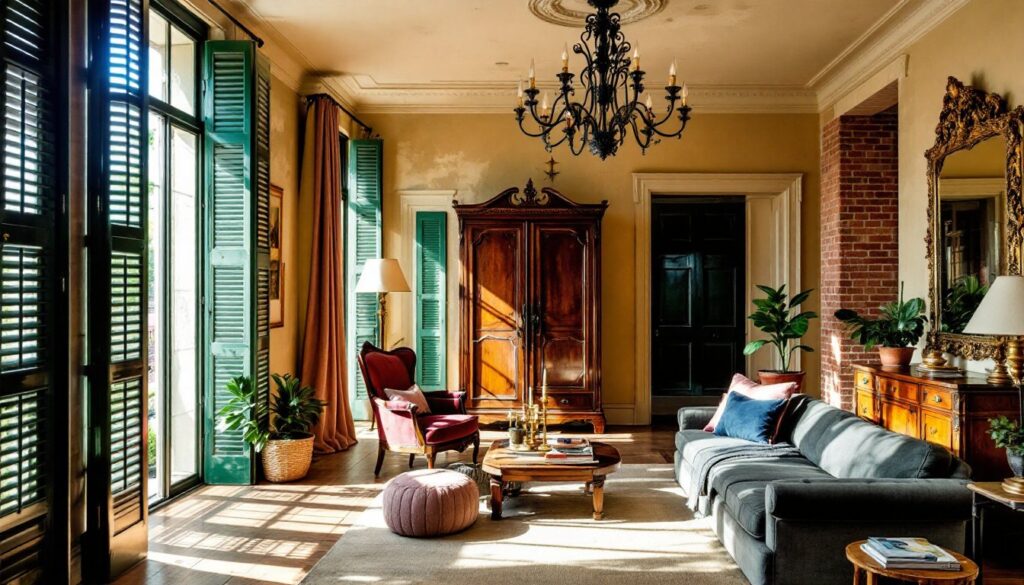
The French Quarter isn’t just a neighborhood, it’s a design mood. Balconies dripping with wrought iron. Shutters painted in deep greens and warm ochres. Rooms that feel both grand and lived-in, with a little bit of history clinging to every surface. If you’ve ever wandered down Royal Street or Bourbon at dusk and thought, “I want my house to feel like this,” you’re not alone. French Quarter interior design borrows from Creole, Spanish Colonial, and European influences to create spaces that are layered, textural, and unapologetically romantic, without tipping into theme-park territory.
Table of Contents
ToggleKey Takeaways
- French Quarter interior design blends French colonial, Spanish, Caribbean, and Creole influences to create layered, textural spaces that embrace imperfection and aged finishes rather than polished perfection.
- Signature elements of French Quarter style include ornate wrought iron details, rich saturated colors like forest green and burnt sienna, exposed brick, patterned tile floors, and floor-to-ceiling windows with louvered shutters.
- Start with your home’s architectural envelope by exposing brick, applying limewash or Venetian plaster, refinishing hardwood floors with matte finishes, and installing solid wood louvered shutters painted in historic colors.
- Choose substantial, carved furniture pieces like wingback chairs and dark wood dining tables, layer textiles in linen and velvet, and add character with vintage brass, ceramic pottery, and ornate mirrors rather than matching sets.
- Lighting should feel moody and layered using wrought iron chandeliers, lantern pendants, and Edison-style bulbs at 2200–2700K color temperature with dimmer switches rather than modern recessed cans.
- French Quarter design works in any home by focusing on material choices, color, and intentional curation—the lived-in aesthetic comes from mixing old and new purposefully, allowing pieces to age naturally over time.
What Is French Quarter Interior Design?
French Quarter style is a regional hybrid that emerged in New Orleans during the 18th and 19th centuries. It blends French colonial architecture, Spanish courtyard living, Caribbean color sensibilities, and Creole craftsmanship into something distinctly its own. Unlike pristine French provincial or symmetrical neoclassical interiors, French Quarter design embraces imperfection, exposed brick, aged plaster, uneven floors, and finishes that show their years.
The architectural bones matter here. Think tall ceilings (often 10–12 feet), floor-to-ceiling windows with louvered shutters, and wide-plank hardwood or patterned tile floors. Rooms open onto interior courtyards or galleries (covered balconies), blurring the line between indoors and out. If your home doesn’t have these features, you can still capture the vibe through material choices, color, and furnishings, but understanding the “why” behind the style helps you avoid generic “New Orleans cliché” decor.
This isn’t minimalism. French Quarter interiors are maximalist in texture and detail, but they’re not chaotic. Everything has a reason: heavy drapes block summer heat, shutters provide hurricane protection, tile floors stay cool underfoot. Form follows climate and culture, which is why the style feels so lived-in.
Key Elements of French Quarter Style
Ornate Wrought Iron Details
Wrought iron is the signature material. In the French Quarter, it shows up as balcony railings, courtyard gates, stair railings, and window grilles, often in intricate scrollwork, fleur-de-lis motifs, or geometric patterns. Incorporating it into your home doesn’t mean installing a full balcony railing (though if you’re renovating an exterior, go for it). Look for smaller applications: wrought iron curtain rods, wall-mounted candle sconces, or decorative grilles mounted as wall art.
If you’re sourcing new pieces, specify hand-forged or hand-finished iron rather than stamped steel painted black, it ages better and has more texture. Authentic wrought iron develops a patina over time: don’t fight it. For DIYers comfortable with metalwork, simple iron brackets or plant hangers can be fabricated using stock scrolls and a MIG welder. Protect finished pieces with a clear wax or matte black enamel rated for exterior use if they’ll be near humidity or moisture.
Rich Color Palettes and Textures
Forget builder beige. French Quarter interiors lean into deep, saturated color: forest green, burnt sienna, ochre gold, dusty rose, Prussian blue, and charcoal. These colors reference European palettes but are dialed up a notch to survive the intense Louisiana light. Paint isn’t precious here, walls might be limewashed plaster, distressed to show underlayers, or finished with a flat eggshell that develops character over time.
Texture is just as important as color. Combine rough with refined: a raw brick accent wall paired with velvet upholstery, or distressed wood beams against smooth plaster. Floors often feature patterned encaustic tile (especially in entryways and kitchens), aged heart pine, or reclaimed cypress. If you’re laying new tile, look for cement-based encaustic options in geometric or floral patterns, install them with a matte sealer to retain the hand-made look. Avoid glossy finishes: they read too modern.
Fabrics add another layer: heavy linen drapes, damask throw pillows, woven jute rugs, and velvet or leather seating. Layering is key, one bold pattern (toile, damask, or botanical print) mixed with solid textures creates depth without clutter.
How to Incorporate French Quarter Design in Your Living Spaces
Start with the envelope, walls, floors, and windows. If you’ve got drywall, consider exposing brick in one area (check if it’s structural or just veneer first). Brick veneer can be carefully removed with a pry bar and hammer, but if you hit CMU block or framing, stop, you’ll need a structural assessment. Exposed brick should be sealed with a breathable masonry sealer (not latex paint) to prevent dust and moisture issues.
Can’t expose brick? Faux-finish your walls with limewash or Venetian plaster for that aged, textured look. Limewash is a DIY-friendly option: mix hydrated lime with water and natural pigments, apply with a masonry brush in uneven strokes, and burnish with a trowel. It won’t cover perfectly, and that’s the point. Coverage is roughly 150–200 square feet per gallon, and you’ll need two coats. Wear gloves and safety goggles, lime is caustic.
For floors, if you’re working with existing hardwood, skip the glossy polyurethane. Sand it down (80-grit, then 120-grit with a drum sander) and finish with a matte or satin oil-based poly or hard wax oil. The goal is a soft sheen that won’t show every scuff. If you’re installing new flooring, reclaimed heart pine or cypress planks (actual dimensions around 3/4″ thick by 3–5″ wide) fit the aesthetic. Expect to pay a premium and acclimate the wood in your space for at least 72 hours before install.
Windows are another opportunity. Swap hollow-core shutters for solid wood louvered shutters with a mortise-and-tenon or tongue-and-groove build. Paint them in a historic color (Charleston green, Hale Navy, or a custom mixed ochre). If you’re keeping curtains, use floor-to-ceiling panels in heavyweight linen or cotton duck, hung on iron rods with decorative finials. Mounting hardware should sit 4–6 inches above the window frame to add height.
Lighting should feel layered and moody. Skip recessed cans in favor of wrought iron chandeliers, lantern-style pendants, and wall sconces with amber or Edison-style bulbs (aim for 2200–2700K color temperature). Dimmer switches are non-negotiable, install compatible LED bulbs to avoid flicker. If you’re adding a ceiling fixture to a room without existing wiring, surface-mount conduit in a matching finish can run along trim or exposed brick without requiring full drywall teardown. Check local electrical codes: many jurisdictions require a licensed electrician for new circuits, and for good reason.
Consider adding design details that build character without major renovation. Crown molding, picture rails, and chair rails were standard in period homes. If you’re installing crown, 3.5″ to 5.5″ MDF or poplar profiles work well and can be painted to match walls or ceilings. Use a miter saw for clean 45-degree cuts at corners, and fill joints with paintable caulk before priming.
Furniture and Decor Choices for Authentic French Quarter Style
French Quarter interiors mix European antiques, American colonial pieces, and tropical accents. Don’t try to match everything, curation beats coordination. Look for furniture with turned legs, carved details, and visible joinery. Armoires, sideboards, and secretaries are staples: they add vertical storage and presence in rooms with high ceilings.
Seating should be substantial. Upholstered wingback chairs, tufted settees, and carved wood benches work well. Avoid anything too sleek or low-profile, mid-century modern doesn’t belong here. Dining tables are often dark wood (mahogany, walnut, or stained oak) with a substantial apron and chunky legs. A 6-foot farm table with a 2″ thick top seats six comfortably and grounds a dining room.
For bedroom spaces, French country styling shares DNA with French Quarter design, both favor carved wood beds, linen bedding, and soft, layered textiles. A wrought iron bed frame or a carved wooden four-poster fits the mood. Layer bedding: start with a cotton or linen duvet, add a quilted coverlet, and finish with throw pillows in velvet or damask.
Accessories should feel collected, not purchased in a set. Hunt for vintage brass candle holders, ceramic pottery in earth tones, botanical prints in simple frames, and woven baskets for storage. Mirrors are key, especially those with ornate gilded or distressed wood frames. Hang a large mirror opposite a window to bounce light and add depth.
Plants bring life and reinforce the courtyard connection. Go for large-leaf tropicals like fiddle leaf figs, monstera, or palms, potted in terracotta or aged ceramic. If you have the space and light, a small indoor fountain or a potted citrus tree nods to the courtyards of the Quarter. Just make sure your floor can handle the weight and moisture, use plant saucers with rubber feet to protect hardwood.
Art and textiles are the final layer. Look for oil paintings (landscapes, still lifes, portraits), vintage maps of New Orleans, or framed botanical illustrations. Textiles, tapestries, throw blankets, table runners, add warmth. Avoid anything too graphic or contemporary: the style leans traditional and slightly formal, balanced by the lived-in textures. Many design experts emphasize that mixing old and new with intention creates spaces that feel timeless rather than dated.
For high-impact decor inspiration, resources like Architectural Digest showcase how layered interiors with historical influence translate into modern homes. Similarly, platforms such as MyDomaine offer room-specific guidance for blending vintage charm with everyday livability.
Conclusion
French Quarter interior design isn’t about perfection, it’s about character. Lean into texture, embrace imperfection, and layer materials that age well. Whether you’re rehabbing a Victorian rowhouse or updating a suburban ranch, the principles hold: rich color, wrought iron, mixed woods, and a healthy disregard for matching sets. Build slowly, source intentionally, and your space will feel like it’s been there for decades.