Healthcare facilities spend millions getting <a href="https://hearthdreamliving.com/good-colleges-for-interior-design/”>interior design right, not for aesthetics, but for measurable patient outcomes. Lower stress markers, faster recovery times, and reduced medication needs all trace back to thoughtful spatial planning, lighting choices, and material selection. Homeowners caring for aging parents, managing chronic conditions, or simply wanting spaces that support better sleep and mental clarity can borrow these evidence-based strategies. This isn’t about sterile white walls or clinical coldness. It’s about creating rooms that actively support physical and emotional wellbeing through intentional design choices rooted in environmental psychology and building science.
Table of Contents
ToggleKey Takeaways
- Hospital interior design principles reduce patient falls by up to 30% through strategic lighting and can be adapted to residential spaces to support recovery, aging-in-place care, and improved sleep quality.
- Multi-layer hospital-inspired lighting—ambient (50-75 foot-candles at 3000K), task lighting (400-500 lumens), and circadian lighting that shifts from cool morning tones to warm evening tones—can improve sleep quality by up to 40% in older adults.
- Muted, desaturated color palettes like sage green and soft slate blue (LRV 50-65) measurably lower heart rate and perceived pain, while pure white should be avoided in recovery areas to prevent eye strain and clinical coldness.
- Functional caregiving room layouts require minimum 36-inch pathways (preferably 42 inches), slip-resistant flooring like luxury vinyl plank, and grab bar blocking installed during framing for future secure mounting without wall damage.
- Accessibility features such as lowered switches (42-44 inches), accessible storage (bottom shelves at 30 inches, tops at 60 inches), and sound dampening through acoustic materials create residential spaces that function as effectively as hospital environments for health and independence.
Why Hospital-Inspired Design Works in Residential Spaces
Modern healthcare design prioritizes evidence-based environmental factors that directly influence healing. Research from the Center for Health Design shows that proper lighting reduces patient falls by up to 30%, while strategic color application lowers anxiety markers measurably. These aren’t abstract benefits, they’re reproducible outcomes that translate directly to home environments.
Residential applications make particular sense in caregiving scenarios: recovery rooms after surgery, spaces for family members with mobility challenges, or dedicated areas for managing chronic conditions. But the principles extend beyond medical necessity. Sleep quality improves with proper circadian lighting. Concentration sharpens in spaces designed to minimize visual noise. Stress responses decrease in rooms with controlled acoustics and calming color temperatures.
The key difference from commercial healthcare spaces lies in scale and personalization. A home recovery room doesn’t need hospital-grade finishes, but it absolutely benefits from grab bar blocking installed during framing, slip-resistant flooring transitions, and task lighting that doesn’t require reaching over the bed. Similarly, designing organic interior elements into healing spaces brings biophilic benefits without sacrificing the clinical functionality borrowed from healthcare settings.
One critical advantage: residential spaces allow for incremental implementation. Unlike hospital renovations bound by continuous operation and strict codes, homeowners can phase improvements over time, testing strategies in one room before expanding successful elements throughout the house.
Core Design Principles from Healthcare Environments
Strategic Lighting for Health and Wellbeing
Hospitals layer lighting types with surgical precision because visual comfort directly impacts recovery rates and staff performance. Residential applications should adopt the same multi-layer approach: ambient, task, and accent lighting working together rather than relying on a single overhead fixture.
Ambient lighting establishes baseline visibility without glare. For caregiving spaces, aim for 50-75 foot-candles at floor level, enough for safe navigation without harsh shadows. LED panels with diffusers work better than bare bulbs: choose 3000K color temperature for general areas (warm enough to feel residential, cool enough for visual acuity). Avoid recessed cans directly over beds, they create uncomfortable direct glare for anyone lying down.
Task lighting addresses specific activities: reading, medication management, wound care. Adjustable swing-arm fixtures mounted at 40-48 inches above finished floor (AFF) give bedridden users control without needing to reach overhead. Look for models with 400-500 lumens and dimming capability. For bathrooms serving mobility-challenged users, install vanity lighting on both sides of mirrors rather than above, it reduces shadows on faces and improves safety during grooming tasks.
Circadian lighting deserves special attention. Healthcare facilities increasingly use tunable white LEDs that shift from cooler blue-enriched light (5000K+) in morning to warmer tones (2700K) in evening, supporting natural melatonin cycles. Residential versions exist at reasonable price points. According to research featured on Homedit, properly timed light exposure can improve sleep quality by up to 40% in older adults, a significant gain for minimal investment.
Don’t overlook night lighting. Hospitals use low-level pathway lighting (toe-kick LEDs or baseboard fixtures) to prevent falls during nighttime bathroom trips. Install these on separate switches or motion sensors so they don’t interfere with sleep but activate automatically when needed. Warm amber LEDs (1800-2200K) preserve night vision better than white or blue-toned options.
Color Psychology and Calming Palettes
Healthcare color selection follows research, not trends. Certain hues measurably reduce agitation, lower blood pressure, and improve focus. Residential applications can leverage these findings without creating institutional-feeling spaces.
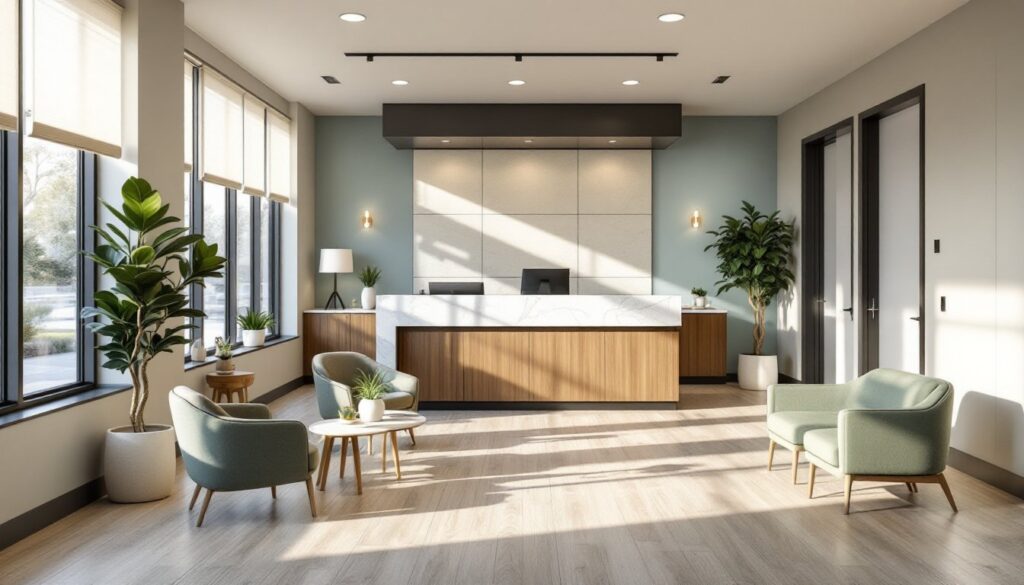
Blues and greens dominate healthcare palettes for good reason: studies consistently show they lower heart rate and reduce perceived pain levels. For home caregiving rooms, consider muted sage greens (Benjamin Moore’s “Saybrook Sage” or similar) or soft slate blues on walls. These aren’t vibrant statement colors, think desaturated, almost gray-washed tones with LRV (Light Reflectance Value) between 50-65 for good visibility without stark brightness.
Avoid pure white in recovery or rest areas. While it seems “clean,” stark white increases eye strain and creates harsh contrast that fatigues vision. Off-whites with gray or beige undertones (LRV 75-85) provide brightness without clinical coldness. Test samples in actual room lighting before committing, LED bulbs reveal different undertones than incandescent or natural light.
Accent colors should support function. Warm coral or terracotta tones in small doses can encourage social interaction and appetite, useful in dining areas for seniors with reduced appetite. Deep navy or charcoal grays work for media rooms where reduced visual stimulation supports relaxation. The principles of texture in interior design become particularly important here, as matte finishes reduce glare while varied material textures add visual interest without color intensity.
One often-overlooked factor: flooring color impacts fall risk perception. High-contrast floors (dark grout with light tile, for example) can create visual confusion for people with depth perception issues, making them hesitate or misstep. Medium-tone continuous surfaces, luxury vinyl plank in consistent wood tones, or low-contrast tile patterns, provide better visual stability.
Ceiling color matters more than most homeowners realize. Healthcare facilities often use slightly darker ceilings (still light, but not pure white) to reduce the visual “cave effect” and make rooms feel less institutional. A ceiling painted one shade darker than walls, or in a very pale version of the wall color, creates subtle definition without visual weight.
Practical Applications for Home Caregiving Rooms
Converting a spare bedroom into a functional caregiving space requires more than moving in a hospital bed. Start with clearances: allow minimum 36-inch pathways on both sides of the bed and at the foot for wheelchair or walker access. If space allows, 42 inches provides more comfortable maneuvering. Measure before buying furniture, a standard hospital bed footprint runs 36 inches wide by 84 inches long, but with side rails extended, factor 40-42 inches of width.
Flooring should prioritize slip resistance without texture that catches walkers or wheelchair wheels. Luxury vinyl plank (LVP) with attached underlayment offers the best balance: slightly resilient underfoot (reduces fall impact), easy to clean, and available in low-gloss finishes with adequate grip. Look for products with 0.5+ static coefficient of friction, most manufacturers list this spec. Avoid high-pile carpet (mobility device nightmare) and polished tile (slip hazard when wet). Transitions between flooring types should be beveled and under ¼-inch height difference per ADA guidelines.
Wall protection makes sense in high-traffic circulation areas. Rather than institutional crash rails, use chair rail molding installed at 32-34 inches AFF, it protects drywall from wheelchair bumps while reading as traditional trim detail. Paint the lower section in satin or semi-gloss sheen for easier cleaning: keep walls above in eggshell or matte.
Grab bar blocking is critical infrastructure. Even if grab bars aren’t immediately needed, install 2×8 or 2×10 blocking horizontally in all bathroom walls during any renovation, running continuously at 33-36 inches AFF. This lets you mount grab bars securely anywhere along that height later without tearing into walls to find studs. Mark blocking locations with small dabs of paint on wall faces before hanging drywall, future you will appreciate the map. If walls are already finished, use toggle bolts rated for 300+ pounds in appropriate drywall, but blocking is vastly superior.
Lighting control placement needs adjustment. Standard switches at 48 inches AFF are hard to reach from wheelchairs. Lower switches to 42-44 inches in caregiving spaces, or install wireless smart switches that can be controlled from bedside tablets or voice assistants. Motion-sensor overrides for pathway lighting prevent users from navigating dark hallways if they can’t reach switches.
Storage should be accessible without bending or reaching above shoulder height. Wall-mounted cabinets with pull-down shelving work well for medical supplies: install with bottom shelves at 30 inches AFF and top shelves no higher than 60 inches. Open shelving between those heights keeps frequently needed items visible and reachable. The strategic use of rhythmic design elements in storage arrangements, repeating cabinet heights, consistent shelf spacing, reduces visual confusion for users with cognitive challenges.
Temperature control deserves attention. Older adults and people with certain conditions struggle with temperature regulation. Install a programmable thermostat with large, backlit displays (many “senior-friendly” models exist), and consider a ceiling fan with remote control for individual comfort adjustment without complicated wall controls. Reverse the fan direction seasonally, counterclockwise in summer pulls cool air up, clockwise in winter pushes warm air down.
Window treatments should provide blackout capability for daytime sleep while allowing easy operation. Motorized cellular shades offer excellent insulation, light control, and accessibility, pricey upfront but worth it for users who can’t manage cords or wands. If budget doesn’t allow motorized options, install standard cordless shades with wand controls rather than cords (safer, easier to operate with limited grip strength).
Consider sound dampening seriously. Healthcare facilities use acoustic ceiling tiles and wall panels to reduce noise-related stress. Residential equivalents include dense carpet padding (if using carpet in hallways), solid-core doors instead of hollow-core (check if your jurisdiction requires fire-rated doors for bedrooms), and weatherstripping around doors to prevent sound transmission between rooms. Ideas from interior design trends increasingly incorporate acoustic panels disguised as decorative wall art, functional and residential in appearance.
Conclusion
Borrowing from hospital interior design isn’t about creating cold, clinical spaces, it’s about leveraging decades of research into environments that actively support health. The best implementations blend evidence-based function with residential warmth, creating rooms that feel like home while working as hard as any healthcare facility to promote wellbeing and independence.