A new build home is both a blessing and a challenge. Clean drywall, fresh floors, and untouched walls sound great, until the homeowner realizes they’re staring at a blank, often builder-beige canvas with zero personality. Unlike a remodel, where existing character guides decisions, a new build demands intentional design from the ground up. That’s also its biggest advantage: every choice, from flooring to fixtures, can be made without compromise or demo. This guide walks through the practical steps to transform a new construction home into a space that feels finished, personal, and genuinely livable.
Table of Contents
ToggleKey Takeaways
- New build interior design offers a blank-canvas advantage where homeowners can customize every surface without costly renovations or dealing with outdated finishes.
- Plan interior design before move-in by measuring spaces, prioritizing contractor work like painting and flooring, and scheduling upgrades before furniture arrives.
- Establish a cohesive color palette with warm neutrals, 2–3 accent colors, and a unifying design thread to prevent new build interiors from feeling sterile or disconnected.
- Upgrade builder-grade features like cabinet hardware, light fixtures, and solid-core doors for significant visual impact without major renovation costs.
- Layer textiles, plants, art, and multiple light sources to add warmth and character that transforms cold, echo-y new builds into comfortable, personalized homes.
- Strategic lighting upgrades including task, ambient, and accent options, plus outdoor landscape lighting, dramatically improve both functionality and curb appeal.
Why New Build Homes Offer Unique Design Opportunities
New construction gives homeowners a rare clean slate. No peeling wallpaper, no outdated tile to rip out, no surprise plumbing issues lurking behind walls. Everything is code-compliant, warranty-backed, and ready for customization.
But that sterile uniformity comes with a catch: most volume builders prioritize cost efficiency over design distinction. The result is often a home with builder-grade finishes, contractor white walls, hollow-core doors, basic chrome hardware, and carpet in standard tan. These features are functional but forgettable.
The upside? Every surface is a blank canvas. Homeowners can layer in finishes, textures, and details without needing to undo someone else’s taste. There’s no need to repaint over bold accent walls or replace outdated fixtures. Instead, the work focuses on adding warmth, depth, and character from scratch.
New builds also offer structural advantages. Modern framing, insulation, and electrical systems make it easier to add recessed lighting, install smart home devices, or upgrade HVAC zones. Many builders offer pre-wiring options during construction for audio, security, or network systems, features that are far more expensive to retrofit later.
The key is treating the move-in as a starting point, not a finish line. Even minor upgrades, swapping out light fixtures, adding textured window treatments, or installing custom shelving, can elevate a space significantly.
Planning Your Interior Design Before Moving In
The best time to plan interior design for a new build is before the first box gets unpacked. Once furniture lands and life starts, making changes becomes exponentially harder.
Start by walking through the empty house with a tape measure and a notebook. Note room dimensions, ceiling heights, window placements, and natural light patterns throughout the day. Sketch a rough floor plan for each space, including door swings and electrical outlet locations. This legwork prevents common mistakes like ordering a sofa that blocks a register or a dining table that crowds a walkway.
Next, prioritize projects by impact and timing. Anything that requires contractors, paint, flooring upgrades, built-ins, or electrical work, should happen before move-in. Once the house is occupied, accessing walls or floors becomes messy and disruptive.
Pre-move priorities typically include:
- Paint (walls, trim, ceilings)
- Flooring changes or additions
- Lighting upgrades or additions
- Window treatments or hardware installation
- Built-in cabinetry or shelving
For projects that can wait, furniture, art, decorative accessories, create a phased plan. Trying to finish everything at once often leads to hasty decisions and buyer’s remorse.
Finally, consider hiring an interior design proposal consultant for a few hours of guidance. Even a single session can clarify priorities, avoid costly mistakes, and help translate Pinterest boards into actionable steps.
Choosing a Cohesive Color Palette and Style Direction
A cohesive color palette is the foundation of good interior design, and it’s especially critical in a new build where every surface starts neutral. Without a clear direction, rooms can end up feeling disconnected or chaotic.
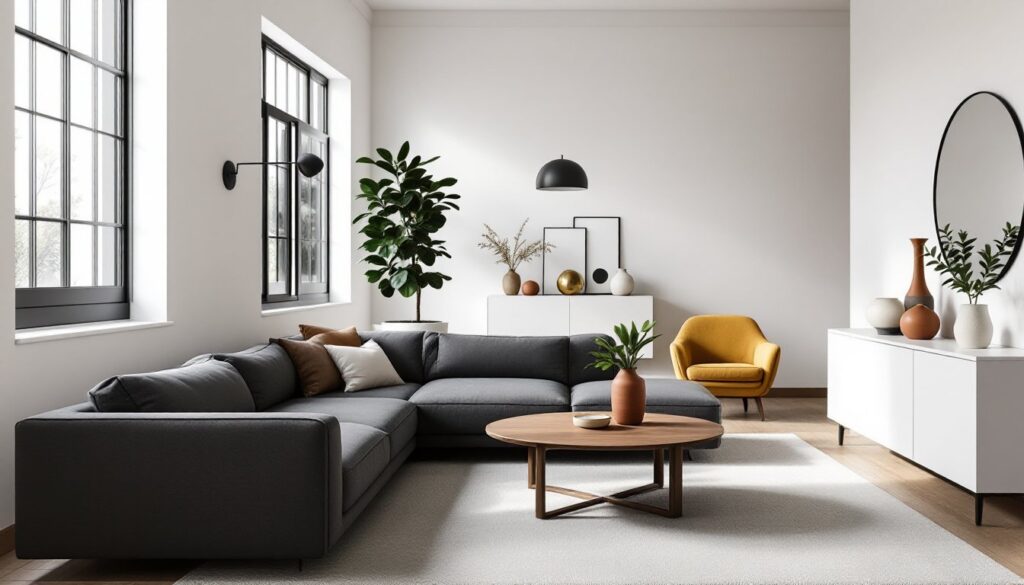
Start by selecting a base neutral, the color that will dominate walls, large furniture, and foundational elements. In 2026, warm whites, soft greiges, and earthy taupes are replacing the cool grays that dominated the 2010s. These tones work well with natural wood, metal accents, and both warm and cool color pops.
From there, choose 2-3 accent colors that will appear in textiles, art, and smaller furnishings. These don’t need to be bold, even muted sage, terracotta, or navy can add depth without overwhelming a space. The goal is repetition: if a blue pillow appears in the living room, echo that blue in a bedroom throw or hallway art.
Style direction matters, too. Mixing styles is fine, encouraged, even, but there should be a unifying thread. Maybe it’s a preference for natural materials, or a tendency toward clean lines, or a love of vintage finds. According to Home Bunch, the most successful new build interiors blend modern architecture with layered, collected details that prevent the space from feeling sterile.
Avoid the trap of over-theming. A “farmhouse” or “coastal” aesthetic can quickly veer into caricature. Instead, focus on materials and proportions. Linen curtains, live-edge wood, woven baskets, and aged metals read as timeless, not trendy.
If the homeowner is working with a designer or using interior design rendering software, this is the stage to test color combinations digitally before committing to gallons of paint.
Flooring and Window Treatment Decisions for New Builds
Flooring is one of the most impactful, and expensive, decisions in a new build. Many builders offer upgrade options during construction, but not all upgrades are worth the premium.
Carpet is standard in most new builds, particularly in bedrooms and upstairs hallways. If the builder installs a low-grade polyester carpet, consider replacing it within the first year with a higher-quality nylon or wool option. Carpet padding matters as much as the carpet itself: an 8-pound density rebond pad provides better durability and sound dampening than builder-standard 6-pound options.
Luxury vinyl plank (LVP) has become the go-to for kitchens, bathrooms, and main living areas. It’s waterproof, durable, and available in realistic wood-look finishes. If the builder offers LVP, verify the wear layer thickness, 20 mil or higher is recommended for high-traffic areas.
For those who prefer real wood, engineered hardwood is a smarter choice than solid hardwood in new construction. New homes settle and shift slightly in the first few years, and engineered planks handle movement better than solid strips. Wider planks (5-7 inches) create a more modern, expensive look than narrow strips.
Window treatments are often an afterthought, but they’re essential for both function and style. Cellular shades offer excellent insulation and light control, especially on large new-construction windows. For a layered look, pair them with linen or cotton curtains hung high and wide to frame the window generously.
Don’t skip blackout options in bedrooms. New builds often have larger windows and thinner walls than older homes, making light and sound control more important. Curtain rods should be mounted 4-6 inches above the window frame and extend 8-12 inches beyond each side for proper proportion and coverage.
Smart Lighting and Electrical Planning
New builds typically include basic overhead lighting, a single ceiling fixture per room, often builder-grade and underwhelming. Upgrading lighting transforms both function and mood.
Start by identifying task, ambient, and accent lighting needs for each room. Kitchens benefit from under-cabinet LED strips (3000K color temperature for warm white) and pendant lights over islands. Living rooms need a mix of floor lamps, table lamps, and possibly recessed cans on dimmer switches.
If recessed lighting wasn’t included during construction, adding it requires cutting into ceilings, a messy job best done before furniture arrives. Retrofit LED cans (4-inch for tight spacing, 6-inch for general use) can be installed by a licensed electrician in a day. Aim for one can per 25-30 square feet in living spaces.
Smart lighting systems like Lutron Caseta or Philips Hue integrate easily into new construction. Many new builds are pre-wired for smart switches: if not, battery-powered smart bulbs offer a no-wiring alternative.
Don’t forget outdoor lighting. New builds often include minimal exterior fixtures. Adding low-voltage landscape lighting along walkways or uplighting on the facade improves curb appeal and safety. According to Dwell, well-planned exterior lighting can also enhance a home’s architectural features and extend usable outdoor space into evening hours.
Personalizing Builder-Grade Features and Finishes
Builder-grade doesn’t mean bad, it just means basic. The good news is that many builder-grade features can be upgraded without major renovation.
Cabinet hardware is the easiest swap. Replacing standard chrome knobs with brushed brass, matte black, or leather-wrapped pulls instantly elevates kitchens and bathrooms. Measure the center-to-center distance of existing holes before ordering to avoid drilling new ones.
Light fixtures are another high-impact, low-effort upgrade. A statement chandelier, modern flush-mount, or sculptural pendant can redefine a room’s style. Make sure the electrical box is rated for the fixture’s weight: most builder boxes support up to 50 pounds, but heavier chandeliers may require a ceiling brace.
Door hardware often gets overlooked, but switching from basic chrome to lever-style handles in a consistent finish (oil-rubbed bronze, satin nickel, matte black) creates visual cohesion throughout the home.
If the builder installed hollow-core interior doors, replacing them with solid-core or panel doors improves sound dampening and perceived quality. Solid-core doors also feel more substantial when closing, a small detail that affects daily experience.
Baseboards and trim in new builds are often minimal, 3.25-inch colonial-style at most. Upgrading to 5.25-inch baseboards and adding crown molding (even a simple 3.5-inch profile) gives rooms a more finished, custom look. This is a DIY-friendly project for those comfortable with a miter saw and nail gun.
For those exploring layered texture interior design, consider adding board-and-batten, shiplap accents, or textured wallpaper to a single feature wall. These treatments add architectural interest without overwhelming the space.
Budget-Friendly Ways to Add Character and Warmth
New builds often feel cold and echo-y right after move-in. Adding warmth doesn’t require a designer budget, just intentional layering.
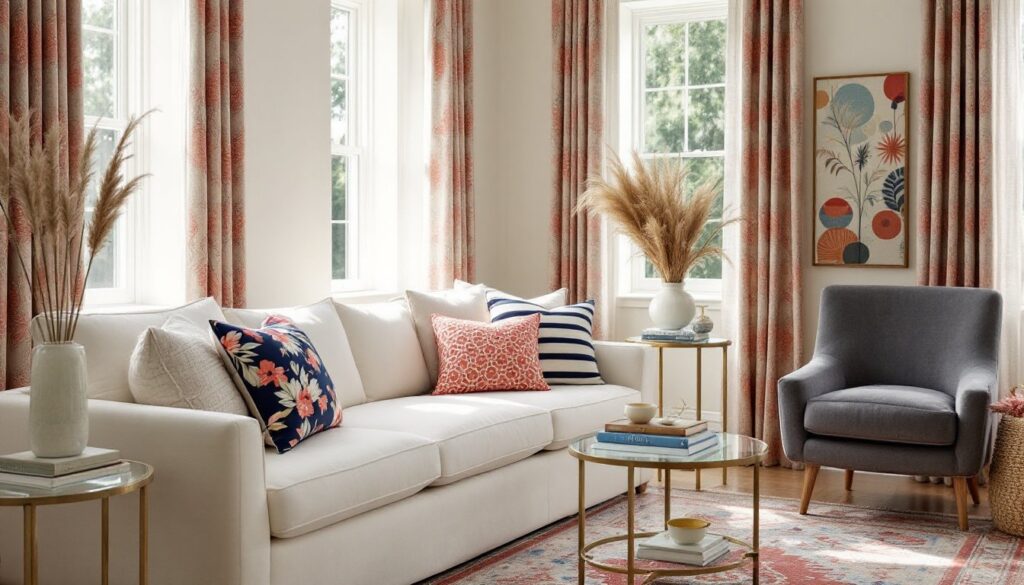
Textiles are the fastest fix. Area rugs anchor furniture groupings and absorb sound. In living rooms, choose a rug large enough that all front furniture legs sit on it (8×10 or 9×12 for most spaces). Layer throw blankets, pillows in varied textures, and linen or cotton curtains to soften hard surfaces.
Live plants bring organic warmth and improve air quality. Low-maintenance options like pothos, snake plants, and fiddle-leaf figs thrive indoors and add vertical interest. For ideas on incorporating natural elements, explore principles of organic interior design.
Open shelving in kitchens, living rooms, or home offices creates opportunities to display books, ceramics, and personal collections. Floating shelves made from 1.5-inch-thick solid wood or quality MDF look more custom than wire racks or particleboard options.
Art and mirrors fill blank walls and reflect light. Instead of a single large piece, try a gallery wall with a mix of frame sizes and styles. Use a paper template to plan the layout on the floor before hammering nails. For hanging, drywall anchors rated for 50 pounds are essential: most art weighs more than expected.
Layered lighting was covered earlier, but it’s worth repeating: table lamps, floor lamps, and sconces create ambiance that overhead lighting can’t match. Aim for multiple light sources per room, each on its own switch or dimmer.
Finally, don’t underestimate the impact of wood tones. New builds often lack wood variety. Mixing a walnut coffee table, oak floating shelves, and a teak bench introduces warmth and depth. As noted by Homedit, varied wood tones prevent monotony and add a collected, lived-in feel.
For quick inspiration, browse interior design tips that focus on accessible, low-cost upgrades. Small changes, swapping out switch plates, adding a console table in the entryway, or painting an interior door a bold color, accumulate into a home that feels intentional and personal.
New builds are a rare opportunity to design a home from scratch without the constraints of previous owners’ choices. With thoughtful planning, smart upgrades, and layered details, even the most generic builder box can become a space that feels custom, warm, and entirely your own.