Designing a small cafe isn’t just about cramming in as many tables as possible. It’s about creating a space where customers linger, where every square foot earns its keep, and where the vibe feels intentional, not accidental. Whether you’re converting a 600-square-foot storefront or reimagining a cramped corner unit, the same principles apply: maximize flow, embrace smart material choices, and let character do the heavy lifting. This guide walks through seven practical strategies to make a small cafe feel bigger, work harder, and leave a lasting impression without requiring a commercial contractor’s budget or a degree in hospitality design.
Table of Contents
ToggleKey Takeaways
- Successful small cafe interior design relies on three fundamentals: circulation (36-inch minimum pathways), capacity planning based on service style, and comfort management through acoustics and ventilation.
- Optimize limited square footage by zoning the space intentionally—allocate 20-25% to entry and counter, 50-60% to seating, and the remainder to circulation and auxiliary areas.
- Use light neutrals with one accent wall, layered lighting (30-50 foot-candles ambient, 75-100 over counters), and pendant fixtures hung 30-36 inches above tables to make small cafes feel larger and more inviting.
- Choose durable, multi-functional furniture like stackable chairs, solid wood or laminate tables with metal bases, and built-in bench seating along walls to maximize functionality without wasting precious space.
- Eliminate clutter through strategic storage solutions—floor-to-ceiling shelving, under-counter drawers, pegboards, and open shelving that doubles as decor—keeping customer areas organized and professional.
- Build cohesive character through intentional branding, consistent signage and color palettes, wall treatments, low-maintenance plants, and 2-3 primary materials that reinforce your cafe’s unique identity.
Understanding the Core Principles of Small Cafe Design
Small cafe design hinges on three fundamentals: circulation, capacity, and comfort. Get one wrong and the whole space suffers.
Circulation means planning how customers move from door to counter to seating without bottlenecks. A clear path at least 36 inches wide between furniture and walls keeps traffic flowing and meets ADA accessibility minimums in most jurisdictions. If the space is under 800 square feet, that pathway becomes non-negotiable, there’s no room for maze-like layouts.
Capacity isn’t just seat count: it’s about balancing table turnover with dwell time. A cafe aiming for quick service can pack in more two-tops and bar seating. A spot encouraging laptop use needs fewer, larger tables with accessible power outlets. Both approaches work, but mixing them without intention creates confusion.
Comfort in tight quarters comes from managing acoustics, temperature, and personal space. Hard surfaces, concrete floors, metal chairs, exposed brick, amplify noise. Adding acoustic panels, fabric seating, or even heavy curtains softens the din without sacrificing the industrial aesthetic many cafes favor. And don’t overlook HVAC: a 400-square-foot space with 15 people and an espresso machine heats up fast. Adequate ventilation isn’t a luxury: it’s a baseline.
Strategic Layout Planning for Limited Square Footage
Layout mistakes are expensive to fix once furniture arrives. Start with a scaled floor plan, graph paper or free software works fine, and test multiple configurations before committing.
Zone the space by function. Entry and ordering counter should occupy roughly 20-25% of the floor plan, seating another 50-60%, and the remainder goes to circulation and auxiliary areas (restrooms, storage, trash). Many designers over-allocate to seating and wonder why the cafe feels cramped.
For seating, mix table sizes and types. A combination of two-tops, four-tops, and counter seating along walls or windows maximizes flexibility. Two-tops can be pushed together for small groups: counter seating uses dead wall space and appeals to solo customers. Avoid large communal tables unless the brand actively encourages it, they’re polarizing and often sit half-empty.
Furniture scale matters. Standard restaurant tables are 30 inches square for two-tops and 36 inches for four-tops, but in a cafe under 700 square feet, dropping to 24-inch two-tops buys precious circulation room without feeling cramped. Pair them with armless chairs or stools that tuck fully under the table.
If structural walls or columns break up the space, use them as natural dividers rather than fighting them. A column becomes an anchor point for a small shelf, a menu board, or even a vertical garden. Designers on Homify frequently showcase projects where obstacles become focal points instead of headaches.
Color Schemes and Lighting That Open Up Tight Spaces
Dark, moody cafes look dramatic in photos but can feel oppressive in a 500-square-foot box. Light neutrals, whites, soft grays, warm beiges, reflect natural and artificial light, making walls recede visually.
That doesn’t mean going sterile. Accent one wall in a deeper tone (charcoal, forest green, terracotta) to add depth without closing in the space. Paint the ceiling the same color as the walls, or go one shade lighter, to blur boundaries and increase perceived height. If the ceiling is low (under 9 feet), skip dark overhead colors entirely.
Lighting layers are non-negotiable. Overhead ambient lighting (recessed LEDs or simple pendants) should provide 30-50 foot-candles of general illumination, bright enough to read a menu but not harsh. Task lighting over the counter and service areas needs 75-100 foot-candles for baristas working with precision.
Pendant fixtures do double duty: they light the space and draw the eye upward, emphasizing ceiling height. Hang them 30-36 inches above tables to avoid head-knocking but keep the fixtures in the sightline. Dimmable LED bulbs (2700-3000K color temperature) let you adjust mood throughout the day, brighter in the morning, softer as evening approaches.
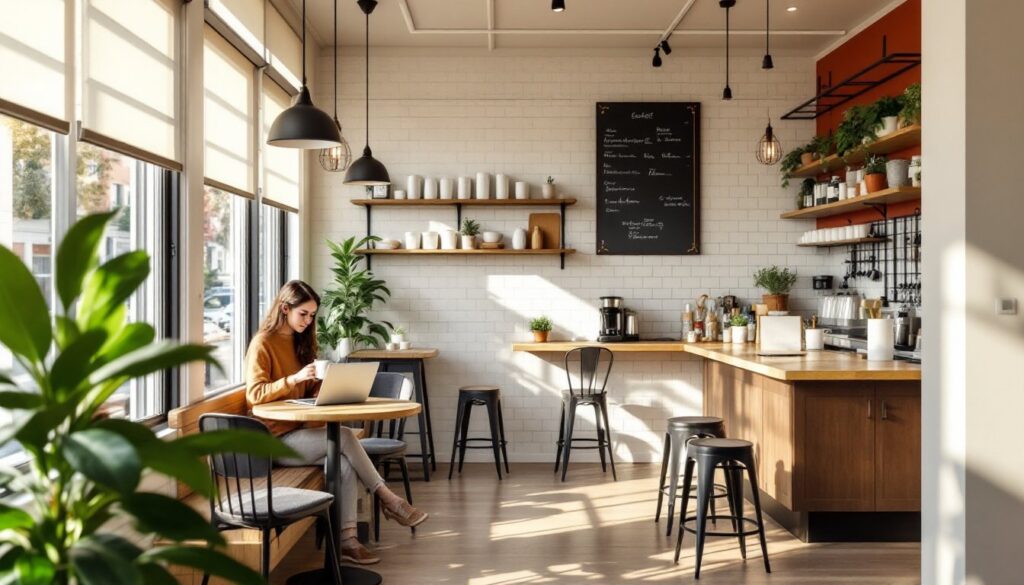
Natural light is gold. If the space has windows, don’t block them with heavy treatments or tall furniture. Sheer roller shades or cafe curtains (hung halfway up the window) control glare while preserving openness. Many successful small cafe layouts prioritize window seating to capitalize on daylight and street views.
Furniture Selection and Placement Strategies
Furniture in a small cafe has to work harder than in a spacious bistro. Every piece should serve multiple purposes or earn its footprint through heavy use.
Chairs and stools: Choose stackable or lightweight options for flexibility. Metal or molded plywood chairs are durable and easy to move when cleaning or reconfiguring. If upholstered seating is a must, go with commercial-grade vinyl or performance fabric rated for 100,000+ double rubs (Wyzenbeek test). Residential fabrics won’t survive daily cafe traffic.
Tables: Solid wood or laminate tops with metal bases hold up better than particleboard. If budget allows, specify butcher block or hardwood plywood with a durable finish (polyurethane or conversion varnish). Avoid glass tops in high-turnover cafes, they show every fingerprint and chip easily.
Bench seating along walls reclaims dead space and accommodates more people per linear foot than individual chairs. Build a simple 2×4 frame with ¾-inch plywood top, add foam and fabric, and mount it to wall studs with heavy-duty L-brackets. This approach is common in creative interiors where every inch counts.
Counter-height vs. standard height: Counter seating (36-42 inches) along a window bar or perimeter wall uses vertical space efficiently and appeals to solo laptop users. Pair with stools that have footrests, dangling feet get uncomfortable fast.
Floating furniture away from walls can make a narrow space feel wider, but only if you maintain that 36-inch circulation path. In truly tight layouts (under 600 square feet), it’s smarter to anchor furniture to walls and keep the center open.
Creative Storage Solutions to Reduce Clutter
Clutter kills the vibe in a small cafe. Visible mops, stacked cups, and cardboard boxes scream “disorganized,” even if the coffee is excellent.
Built-in storage is the most space-efficient option. A floor-to-ceiling shelving unit in a back corner (12 inches deep, 24-36 inches wide) holds supplies, retail items, and back-stock without protruding into customer areas. Use the lower shelves for heavy items (syrups, bulk coffee), upper shelves for light or decorative stock.
If building custom isn’t an option, modular wire shelving (like Metro or similar commercial units) is inexpensive and adjustable. A 4-shelf unit (18×48 inches) holds a surprising amount and can be tucked behind a service counter or in a hallway.
Under-counter space is often wasted. Install pull-out drawers or wire baskets under the espresso bar for napkins, stir sticks, and cleaning supplies. Drawers on full-extension slides make access easier in cramped quarters.
For customer-facing storage, open shelving for mugs or retail bags doubles as decor. Mount shelves with heavy-duty brackets rated for the load, floating shelves look clean but sag if overloaded. A 1×10 pine board (actual dimensions ¾ x 9¼ inches) with brackets every 24 inches supports about 20-30 pounds per shelf, enough for ceramics or packaged goods.
Hooks and pegboards turn vertical surfaces into storage. A pegboard wall behind the counter organizes tools, pour-over equipment, or aprons. Use metal pegboard for an industrial look: it’s sturdier than tempered hardboard. Resources like Homedit showcase dozens of pegboard configurations for tight commercial spaces.
Adding Character Through Decor and Branding Elements
A small cafe doesn’t need expensive art or custom millwork to feel unique, it needs intentional, cohesive details.
Branding starts with signage. A well-designed exterior sign (blade sign, window lettering, or painted mural) sets expectations before customers enter. Interior signage, menu boards, directional cues, should use the same fonts and color palette. Consistency builds trust and makes the space feel professional.
Wall treatments add character without sacrificing floor space. Shiplap, board-and-batten, or even peel-and-stick wallpaper create texture. For a budget-friendly option, paint a geometric accent pattern using painter’s tape and low-VOC latex paint (Benjamin Moore Aura or Sherwin-Williams Emerald). Two coats over primed drywall provide durability.
Plants soften hard edges and improve air quality. Pothos, snake plants, or philodendrons thrive in low light and need minimal care. Mount planters on walls with keyhole brackets or use tension-rod shelves in windows. Avoid floor plants in high-traffic areas, they’ll get knocked over.
Lighting fixtures as decor: Edison bulbs in cage pendants, vintage-style sconces, or industrial track lighting reinforce theme without extra square footage. Wire the fixtures to dimmers for mood control. Most jurisdictions require a licensed electrician for hard-wired installations, but plug-in track systems are DIY-friendly.
Materials tell a story. Reclaimed wood, subway tile, poured concrete, each conveys a different aesthetic. Don’t mix too many finishes: pick two or three primary materials and repeat them throughout. The principle mirrors spatial design projects where restraint beats excess.
Conclusion
Small cafe design isn’t about making compromises, it’s about making every choice count. Layout, lighting, furniture, and storage all work together to create a space that feels intentional, not accidental. Stick to a clear plan, invest in durable materials, and let your brand show through in the details. Done right, a 600-square-foot cafe can outperform a sprawling space that never figured out its own identity.