Traditional modern interior design, often called transitional style, is the sweet spot where classic elegance shakes hands with contemporary simplicity. It’s not about picking a side: it’s about creating a space that feels both timeless and current. If you’ve ever walked into a room and thought, “This feels put-together but not stuffy,” you were probably looking at transitional design. This style works because it borrows the best from both worlds: the warmth and craftsmanship of traditional design paired with the clean lines and uncluttered appeal of modern aesthetics. Whether you’re tackling a full renovation or just rethinking your living room layout, mastering this balanced approach can transform your home into a space that’s as livable as it is stylish.
Table of Contents
ToggleKey Takeaways
- Traditional modern interior design, also known as transitional style, combines classic elegance with contemporary simplicity to create spaces that feel both timeless and current.
- Successful transitional design follows a 60-30-10 color rule using neutral dominants like soft gray or greige, secondary muted tones, and accent colors in jewel tones or warm metallics.
- Balance furniture styles by mixing silhouettes—pair classic wingback chairs with sleek metal lamps, traditional wood tables with modern chairs—while maintaining visual weight and proportion.
- Layer textures and materials strategically by combining wood, metal, fabric, glass, and natural elements to avoid flat, one-note spaces without visual clutter.
- Avoid common mistakes like forcing a 50/50 style split, overloading on pattern, or choosing trendy pieces over timeless design that will keep your home looking sophisticated for years.
- Work with your home’s existing architecture by preserving original trim or adding simple details that blend traditional warmth with modern minimalism across all rooms.
What Is Traditional Modern Interior Design?
Transitional design sits squarely between the ornate details of traditional interiors and the minimalist ethos of modern spaces. Think of it as a conversation between a Chippendale chair and a mid-century credenza, they might come from different eras, but they can absolutely share the same room.
Traditional design leans on rich wood tones, upholstered furniture, molding, and decorative accents like crown molding or wainscoting. Modern design strips things down: neutral palettes, geometric forms, metal and glass materials, and a “less is more” philosophy. Transitional style cherry-picks elements from each, aiming for visual balance without tipping into fussiness or sterility.
The result? Spaces that feel grounded and sophisticated, with enough personality to avoid the showroom vibe. You’ll see curved armchairs next to streamlined coffee tables, or a tufted headboard paired with simple pendant lighting. The key is restraint, each element should have breathing room.
Key Elements That Define Traditional Modern Style
Getting transitional design right means understanding its building blocks. Start with neutral base colors, grays, taupes, soft whites, and warm beiges form the foundation. These aren’t boring: they’re the backdrop that lets your furniture and textures do the talking.
Furniture profiles should mix silhouettes. Pair a classic wingback chair upholstered in linen with a sleek metal floor lamp. Use a traditional dining table with clean-lined chairs, or flip it: modern table, upholstered traditional seating. The proportions matter more than the pedigree.
Architectural details play a role too. If your home has original baseboards or chair rails, keep them, just paint them in a crisp, contemporary color. If you’re adding trim, go simple: a 3-1/2-inch baseboard in MDF with a slight profile reads traditional without going Victorian. Avoid overly ornate crown molding unless your ceilings are at least 9 feet: otherwise it overwhelms the space.
Lighting is where you can have fun. A chandelier with clean arms or a drum pendant in linen works beautifully over a classic dining table. Mix finishes, brushed nickel, matte black, aged brass, but keep them consistent within each room to avoid visual chaos.
Color Palettes for Traditional Modern Spaces
Stick to a 60-30-10 rule: 60% dominant neutral, 30% secondary color, 10% accent. For transitional spaces, your dominant is usually a soft gray or greige. The secondary might be a deeper taupe, charcoal, or muted blue. The accent? That’s where you bring in a deeper jewel tone or warm metallics.
Avoid high-contrast schemes unless you’re leaning heavily modern. Instead, layer tones within the same color family. A living room might use three shades of gray, light walls, medium sofa, dark accent pillows, with warm wood and brass to keep it from feeling cold.
If you want color beyond neutrals, choose muted versions of classic hues: dusty blue instead of royal, olive instead of kelly green, terracotta instead of fire-engine red. These read sophisticated, not loud, and they won’t date your space in three years.
How to Choose Furniture That Blends Both Styles
Furniture shopping for transitional spaces requires a good eye and a tape measure. Start by identifying which pieces will anchor the room, sofa, bed, dining table, and decide if each will tilt traditional or modern. Then balance with the supporting cast.
For upholstered pieces, look for clean-lined silhouettes with traditional details. A sofa with track arms and turned legs bridges both worlds. Avoid anything too skirted or ruffled (that’s pure traditional) or overly boxy and low-slung (that’s full modern). Tight-back cushions in neutral fabrics like linen, cotton-linen blends, or performance velvet work well.
Wood furniture should show craftsmanship but not excessive carving. A dining table in walnut or oak with a simple tapered leg reads traditional: pair it with upholstered parsons chairs for balance. Case goods, dressers, credenzas, nightstands, should have simple hardware in brushed metals, not ornate brass pulls.
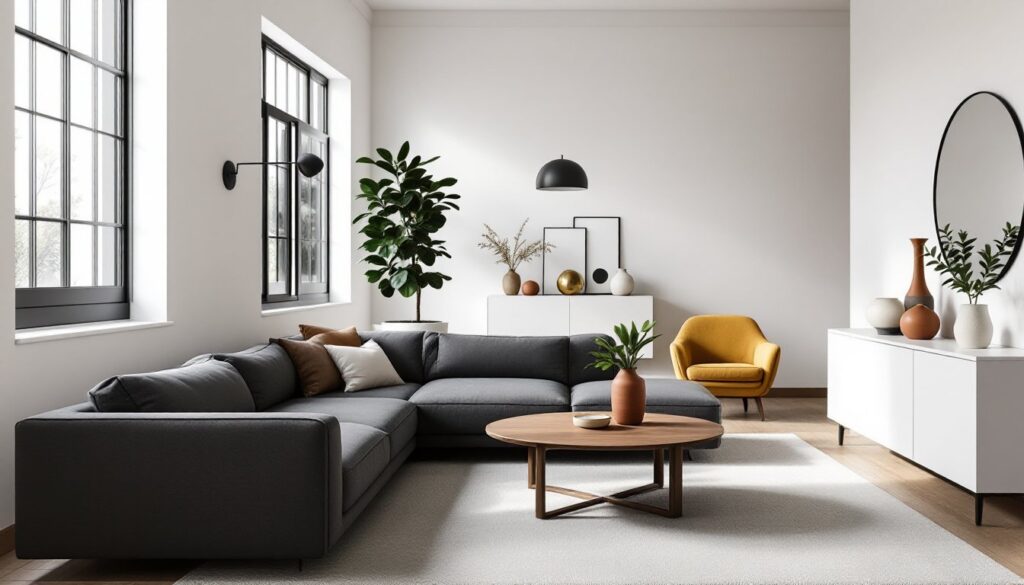
Scale matters. Transitional rooms aren’t overstuffed. Leave space between furniture groupings. A sectional can work, but choose one with a tight back and metal legs, not a deep-tufted, rolled-arm behemoth.
If you’re mixing textures and materials, combine wood, metal, and fabric in each space. A wood coffee table with a metal base, upholstered dining chairs with wood legs, a metal bed frame with a wood headboard, these pairings feel intentional, not accidental.
Mixing Traditional and Modern Textures and Materials
Texture is where transitional design gets interesting. Without it, you end up with a flat, one-note space. The trick is layering materials that have different visual weights and tactile qualities.
Fabrics should range from smooth to nubby. Pair a velvet sofa (traditional) with linen throw pillows (modern). Use a wool or jute rug underfoot, natural fibers ground a room and add warmth without pattern overload. Avoid heavy brocades or damasks unless you’re using them sparingly as a single accent pillow.
Hard surfaces need variety too. If your flooring is wide-plank oak (traditional leaning), balance it with matte-finish cabinetry or quartz countertops (modern). If you’ve got polished concrete or large-format tile (modern), warm it up with wood furniture and soft textiles.
Metals are your friends. Mixing finishes, brushed nickel, oil-rubbed bronze, matte black, adds depth. Just keep each finish to specific functions: maybe black for lighting, nickel for plumbing fixtures, brass for cabinet hardware. This creates visual rhythm without clutter.
Glass and mirrors lighten traditional elements. A heavy wood console feels less imposing with a frameless mirror above it. A traditional dining room benefits from a glass-top table or acrylic chairs to keep sightlines open.
Don’t forget natural elements. Stone, leather, live-edge wood, and plants bring in organic textures that soften the line between traditional warmth and modern minimalism.
Room-by-Room Application Tips
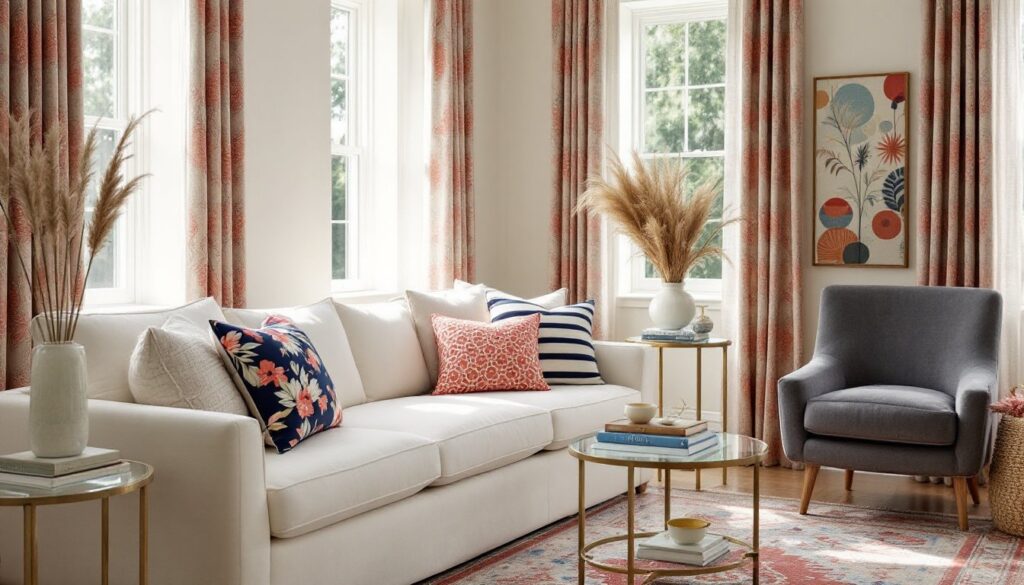
Living Room: Start with a neutral sofa, gray, taupe, or greige, and layer in a traditional coffee table (wood with turned legs) and modern side tables (metal and glass). Use a large neutral area rug (wool or jute, 8’x10′ minimum for a standard room) to anchor the seating group. Add one traditional accent chair and one modern floor lamp. Keep window treatments simple: linen or cotton drapes in a solid color, hung high and wide on simple rods.
Dining Room: A wood dining table with clean lines pairs beautifully with upholstered parsons chairs or modern metal chairs with cushions. Hang a simple chandelier, think drum shade or clean-armed fixture, centered over the table, about 30-34 inches above the surface. If you’ve got a buffet or sideboard, choose one style (traditional wood or modern lacquered) and balance with opposite-style accessories.
Bedroom: Use a tufted or upholstered headboard (traditional) with streamlined nightstands (modern). Bedding should be layered but not fussy: a duvet in a solid neutral, a textured throw at the foot, and a couple of accent pillows, not a mountain of them. Lighting is key: matching bedside lamps with simple shades, or pendant lights for a modern twist. Keep the dresser simple with minimal hardware.
Kitchen: If you’re renovating, go with shaker-style cabinets, they’re the ultimate transitional piece. Paint them a soft gray or white, and pair with quartz or marble countertops. Use subway tile for backsplash (classic) but install it in a herringbone or vertical stack (modern). Pendant lights over an island should be simple: clear glass globes, metal cages, or simple drum shades. Hardware should be bar pulls in brushed nickel or matte black, 5-6 inches in length for drawers, 3-4 inches for doors.
Bathroom: Stick with classic white subway or large-format tile, but mix the layout (vertical, stacked, or herringbone). Use a floating vanity (modern) with a marble or quartz top (traditional material, modern edge profile). Fixtures should match in finish, matte black or brushed nickel, and keep the silhouettes clean. A frameless mirror or one with a simple metal frame works better than ornate traditional styles.
Common Mistakes to Avoid When Mixing Styles
Going 50/50 on everything. You don’t need an equal split of traditional and modern pieces. Aim for a 60/40 or 70/30 ratio in either direction, depending on your preference. Too much balance reads bland.
Ignoring scale. A massive tufted sectional won’t work with spindly modern side tables. Match the visual weight of pieces, even if the styles differ. Large traditional furniture needs equally substantial modern counterparts, not delicate wire-frame chairs.
Overloading on pattern. Transitional design works best with minimal pattern. If you want a patterned rug, keep the upholstery solid. If you’re using patterned throw pillows, limit it to one or two in geometric or subtle prints. Avoid florals, paisleys, or anything too ornate.
Skipping the edit. Just because you can mix styles doesn’t mean every piece needs to stay. Be ruthless. If a piece doesn’t serve a function or improve the look, it goes. Transitional spaces need breathing room.
Choosing trendy over timeless. The whole point of transitional design is longevity. Skip the ultra-trendy paint colors (looking at you, millennial pink) and the furniture that’ll look dated in two years. Stick with design principles that have staying power: quality materials, classic proportions, and versatile palettes.
Forgetting lighting layers. A single overhead fixture won’t cut it. You need ambient lighting (overhead or recessed), task lighting (table lamps, pendants), and accent lighting (picture lights, sconces). Each layer adds depth and functionality.
Neglecting hardware and fixtures. Mismatched cabinet pulls, faucets, and light switches disrupt the cohesive look. Spend time selecting these details, they’re small but mighty. Consistency in finish (all brushed nickel, all matte black, etc.) ties a room together.
Ignoring your home’s architecture. A 1920s bungalow and a 1990s colonial will each have different bones. Work with what you’ve got. If you have beautiful original trim, don’t rip it out for a modern look, paint it and pair it with contemporary furnishings. If your home is builder-grade bland, adding simple trim and thoughtful finishes will give you the traditional elements you need to balance modern pieces.